Electrical Schematics
Complete electrical design for the ESP32 Emu Turbo, split into 7 detailed schematic sheets with cross-sheet global labels.
1. Power Supply
USB-C, IP5306, AMS1117, battery
2. MCU
ESP32-S3 + 35 GPIO labels
3. Display
ILI9488 8080 parallel
4. Audio
PAM8403 + speaker
5. SD Card
SPI ROM storage
6. Controls
12 buttons + debounce
7. USB Data
Native USB (flash + debug)
KiCad 10 project: hardware/kicad/
make generate-schematic   # Generate 7 .kicad_sch files
make render-schematics    # Export SVG + PDF
System Block Diagram
                         ┌──────────────────┐
                         │                  │
    USB-C ──────────────>│   IP5306 Module  │──── 5V rail
                         │  (charge+boost)  │
                         └────────┬─────────┘
                                  │
                          ┌───────┴───────┐
                          │               │
                    ┌─────┴─────┐   ┌─────┴──────┐
                    │ LiPo Batt │   │  AMS1117   │
                    │ 3.7V      │   │ 5V -> 3.3V │
                    │ 5000 mAh  │   └─────┬──────┘
                    │ (105080)  │         │
                    └───────────┘         │ 3.3V
                                          │
                              ┌───────────┴───────────┐
                              │   ESP32-S3-WROOM-1    │
                              │   N16R8 (240MHz ×2)   │
                              └──┬──┬──┬──┬──┬──┬──┬──┘
                                 │  │  │  │  │  │  │
                    ┌────────────┘  │  │  │  │  │  └──────────┐
                    │               │  │  │  │  │             │
              ┌─────┴─────┐  ┌─────┴──┘  │  └──┴─────┐  ┌────┴────┐
              │ Display   │  │ SD Card│  │  │ SPI    │  │ Controls│
              │ ILI9488   │  │ SPI    │  │  │(coproc)│  │ 12 btns │
              │ 8080 ‖    │  └────────┘  │  └───┬────┘  └─────────┘
              └───────────┘              │      │
                                   ┌─────┴──┐  ┌┴─────────────┐
                                   │USB Data│  │ESP32-S3-MINI │
                                   │(D-/D+) │  │  -1 (v2)     │
                                   └────────┘  │  I2S → Audio │
                                               └──────────────┘
Sheet 1 — Power Supply
USB-C input with CC pull-downs, IP5306 charge-and-play module, AMS1117-3.3 voltage regulator.
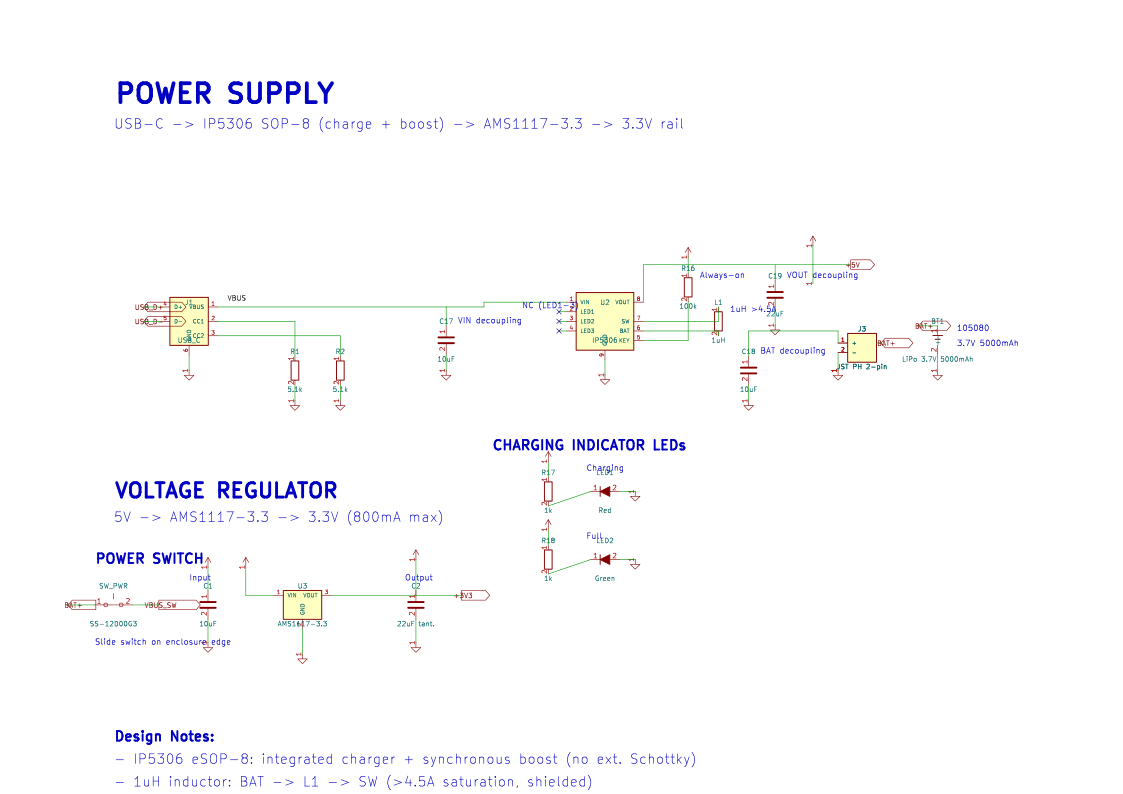
| Ref | Component | Value | Purpose | Datasheet |
|---|---|---|---|---|
| J1 | USB-C connector | — | 5V power input | |
| J3 | JST PH 2-pin connector | — | LiPo battery connector | |
| R1, R2 | Resistor | 5.1 kΩ | CC1/CC2 pull-down (UFP identification) | |
| R16 | Resistor | 100 kΩ | IP5306 KEY pin pull-down | |
| R17 | Resistor | 1 kΩ | LED1 current limiting | |
| R18 | Resistor | 1 kΩ | LED2 current limiting | |
| U2 | IP5306 module | — | LiPo charger + 5V boost (charge-and-play) | |
| BT1 | Battery | LiPo 3.7V 5000mAh | 105080 cell | — |
| U3 | LDO regulator | AMS1117-3.3 | 5V to 3.3V, 800mA max | |
| L1 | Inductor | 1 µH 4.5A | IP5306 boost inductor | |
| LED1 | Red LED | 0805 | Charging indicator (IP5306) | |
| LED2 | Green LED | 0805 | Fully charged indicator (IP5306) | |
| SW_PWR | Slide switch | SS-12D00G3 | Power on/off | |
| C1 | Capacitor | 10 µF | LDO input decoupling | |
| C2 | Capacitor | 22 µF | LDO output stability | |
| C17, C18 | Capacitor | 10 µF | IP5306/rail decoupling | |
| C19 | Capacitor | 22 µF | Bulk capacitor |
Power Budget
| Consumer | Typical | Peak |
|---|---|---|
| ESP32-S3 (dual-core active) | 150 mA | 350 mA |
| ILI9488 display + backlight | 80 mA | 120 mA |
| PAM8403 + speaker | 20 mA | 100 mA |
| SD card (SPI read) | 30 mA | 100 mA |
| Misc (pull-ups, buttons) | 10 mA | 20 mA |
| Total | ~290 mA | ~690 mA |
Battery life: 5000 mAh / 290 mA ≈ 17 hours typical gameplay
Sheet 2 — MCU (ESP32-S3)
ESP32-S3-WROOM-1 N16R8 with all 35 GPIO connections grouped by function, decoupling capacitors, and EN reset circuit.
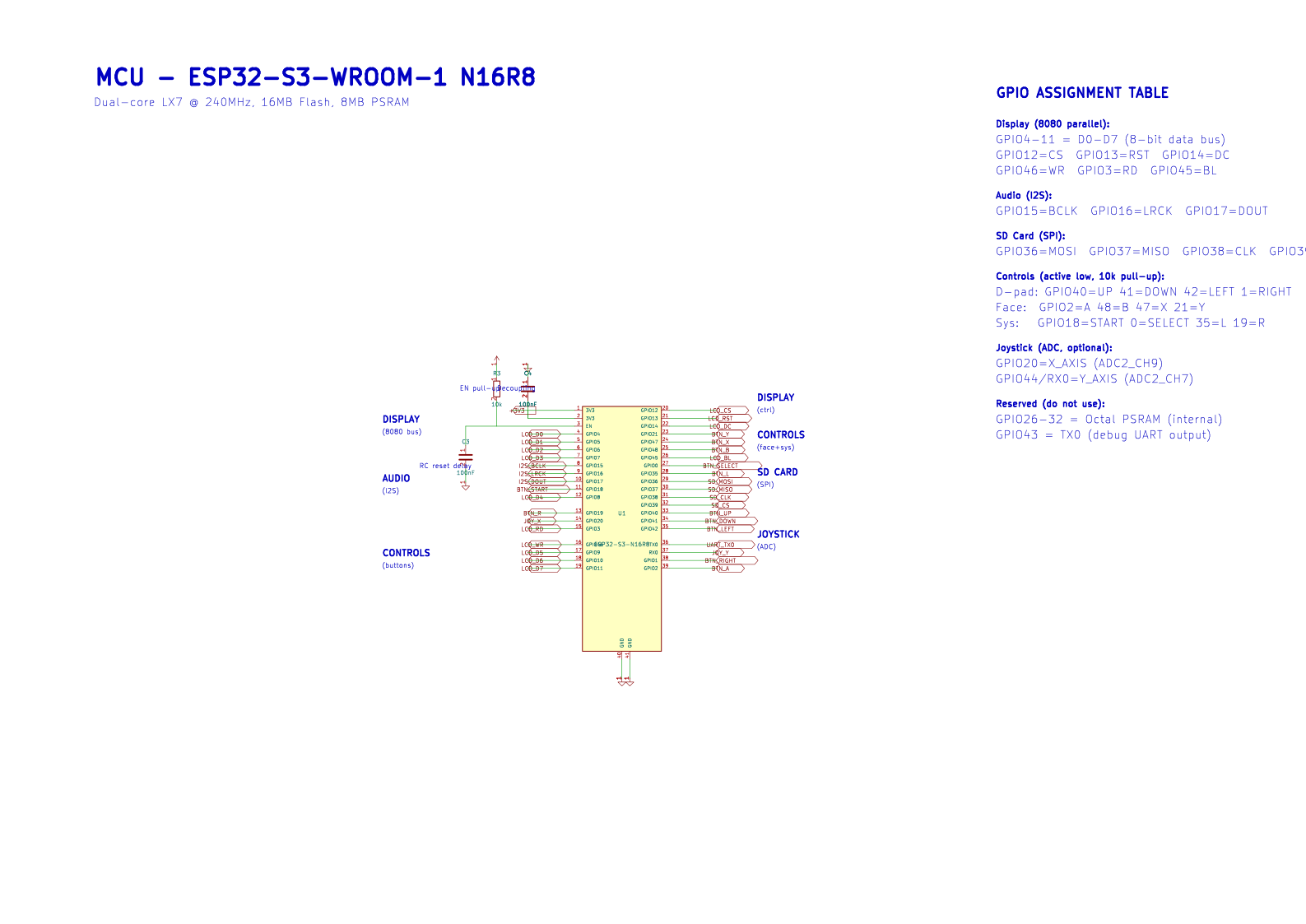
| Ref | Component | Value | Purpose | Datasheet |
|---|---|---|---|---|
| U1 | MCU module | ESP32-S3-WROOM-1 N16R8 | 16MB Flash, 8MB PSRAM | |
| R3 | Resistor | 10 kΩ | EN pull-up (keep-alive) | |
| C3 | Capacitor | 100 nF | EN reset delay (RC = 1ms) | |
| C4 | Capacitor | 100 nF | 3V3 decoupling | |
| SW_RST | Tact switch | — | EN reset (pulls EN low) | |
| SW_BOOT | Tact switch | — | Boot mode (pulls GPIO0 low) |
GPIO Assignment
| Function | GPIOs | Signals | Bus |
|---|---|---|---|
| Display | 4–11 | D0–D7 | 8080 data |
| 12, 13, 14, 46, 3, 45 | CS, RST, DC, WR, RD, BL | 8080 control | |
| Audio | 15, 16, 17 | BCLK, LRCK, DOUT | I2S |
| SD Card | 36, 37, 38, 39 | MOSI, MISO, CLK, CS | SPI |
| D-pad | 40, 41, 42, 1 | UP, DOWN, LEFT, RIGHT | GPIO |
| Face | 2, 48, 47, 21 | A, B, X, Y | GPIO |
| System | 18, 0 | START, SELECT | GPIO |
| Shoulder | 35, 43 | L, R | GPIO |
| USB Data | 19, 20 | USB_D-, USB_D+ | USB |
GPIO26–32 are used internally by the PSRAM. GPIO19/20 are the native USB D-/D+ pins (firmware flash + debug console via USB CDC).
Sheet 3 — Display
ILI9488 4.0" 320×480 bare panel with 40-pin FPC, 8-bit 8080 parallel interface — mandatory for SNES emulation speed. FPC pin mapping per ILI9488 panel datasheet: pins 9-12=CS/DC/WR/RD, pin 15=RESET, pins 17-24=DB0-DB7, pin 33=LED-A(backlight), pins 6-7=VDDI/VDDA(+3V3), pins 38-39=IM0/IM1(+3V3), pin 40=IM2(GND). Note: on the PCB, display Pin N maps to connector Pad (41−N) due to the landscape FPC pass-through (see PCB docs).
| Ref | Component | Value | Purpose | Datasheet |
|---|---|---|---|---|
| J4 | FPC connector | 40-pin 0.5mm bottom contact | Display ribbon cable |
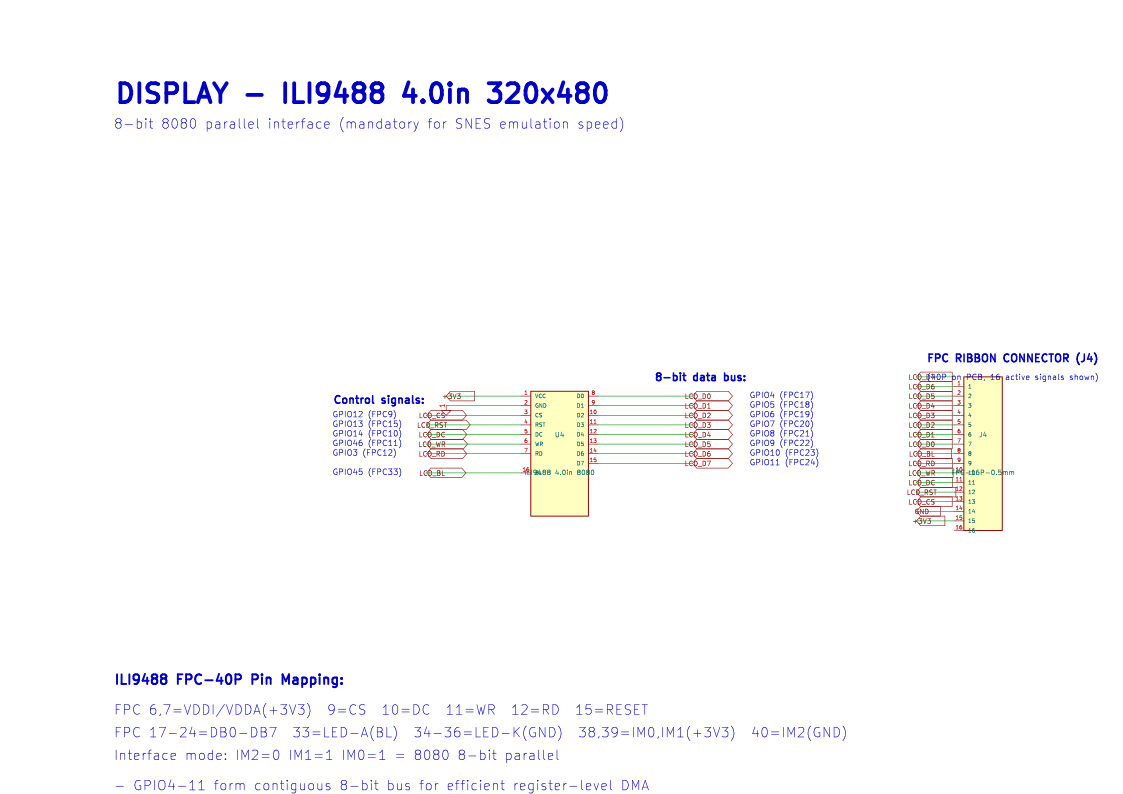
The 8080 parallel mode writes a full pixel (16-bit RGB565) in 2 bus cycles. SPI would need 16 clock cycles per pixel, making it too slow for 60fps full-screen SNES rendering. GPIO4–11 form a contiguous 8-bit data bus for efficient register-level DMA.
Sheet 4 — Audio
I2S output from ESP32-S3 to PAM8403 Class-D amplifier driving a 28mm 8Ω speaker.
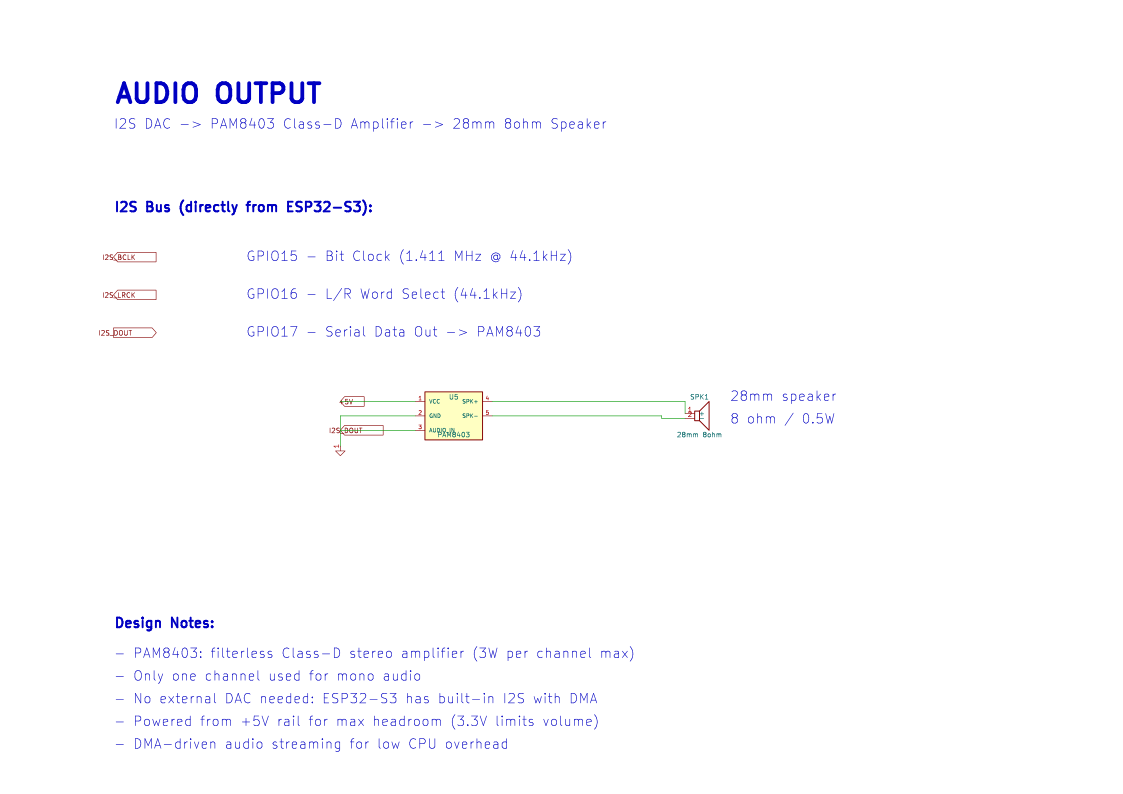
| Ref | Component | Value | Purpose | Datasheet |
|---|---|---|---|---|
| U5 | Amplifier | PAM8403 | Filterless Class-D, 3W/ch | |
| C21 | Capacitor | 100 nF (C49678) | VREF bypass capacitor | |
| C22 | Capacitor | 0.47 µF (C1525) | DC-blocking cap on audio input | — |
| C23, C24, C25 | Capacitor | 1 µF (C15849) | VDD and PVDD decoupling caps | — |
| R20, R21 | Resistor | 20 kΩ (C4184) | Bias resistors on INL/INR to GND | — |
| LS1 | Speaker | 28mm 8Ω 0.5W | Mono output | — |
The PAM8403 is powered from the +5V rail for maximum headroom. Only one channel is used for mono audio. ESP32-S3 I2S with DMA provides low-CPU-overhead audio streaming. The passive components (C21–C25, R20–R21) follow the PAM8403 datasheet application circuit for proper biasing, DC blocking, and power supply decoupling.
Sheet 5 — SD Card
Micro SD card module via SPI bus for ROM storage (SNES ROMs up to 6MB, FAT32).
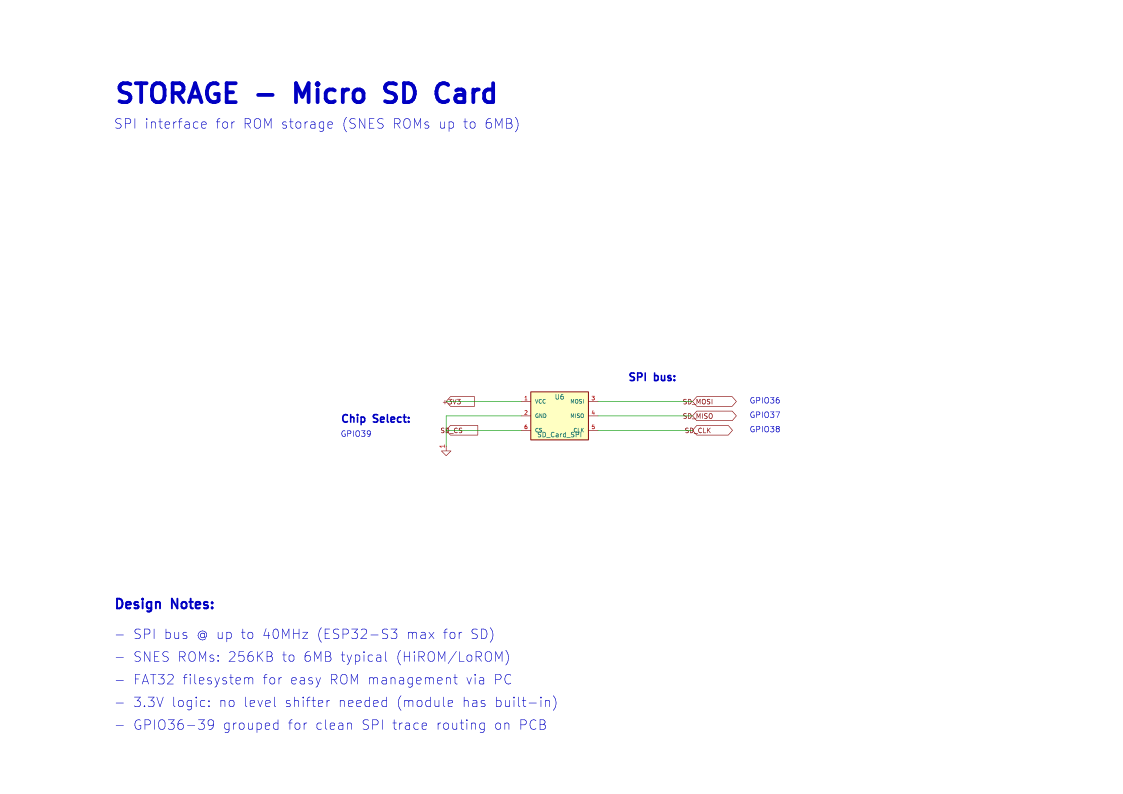
| Ref | Component | Datasheet |
|---|---|---|
| U6 | Micro SD slot (TF-01A) |
| Signal | GPIO | Direction |
|---|---|---|
| MOSI | GPIO36 | ESP32 → SD |
| MISO | GPIO37 | SD → ESP32 |
| CLK | GPIO38 | ESP32 → SD |
| CS | GPIO39 | ESP32 → SD |
SPI bus up to 40MHz. GPIO36–39 are grouped for clean routing. The SD module has a built-in level shifter (3.3V safe). On the PCB, the SD card slot VCC and GND pins are connected via vias to the inner power planes (+3V3 and GND) for clean power delivery with minimal trace length.
Sheet 6 — Controls
13 tact switches (SNES layout + MENU) with individual 10kΩ pull-up + 100nF debounce per button. Plus SW_RST (reset) and SW_BOOT (boot mode) on Sheet 2. Tact switch datasheet: PDF.
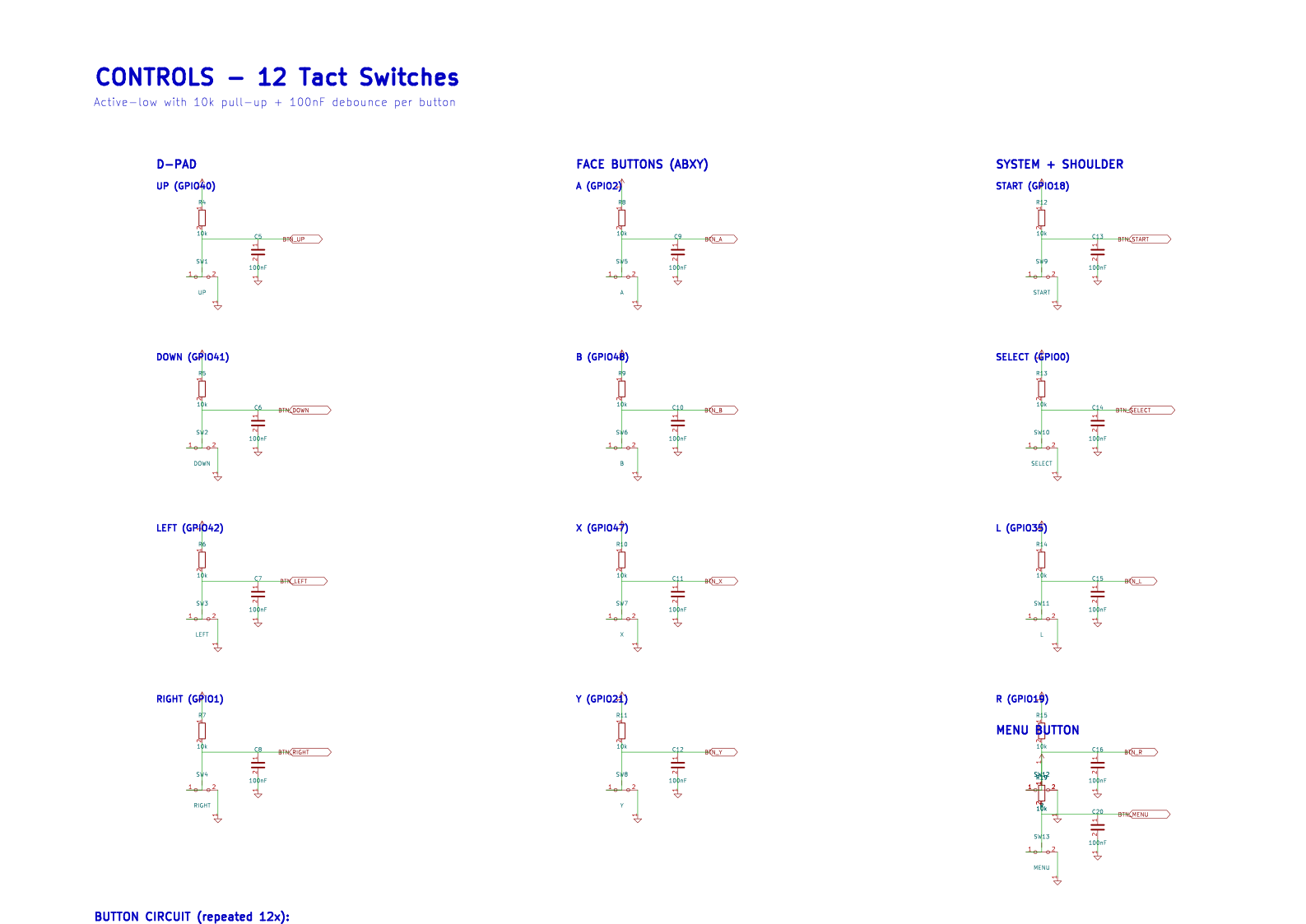
Button Circuit (repeated 13×)
+3V3 ──[10kΩ R]──┬──── GPIO_x (global label)
                  │
                [100nF C]
                  │
                 GND

     [SW tact]──┤
                └── GND
Idle = HIGH (3.3V via pull-up), Pressed = LOW (grounded through switch).
| Ref | Component | Value | Purpose |
|---|---|---|---|
| R4–R15, R19 | Resistor | 10 kΩ (C17414) | Button pull-ups (12 + MENU) |
| C5–C16, C20 | Capacitor | 100 nF (C49678) | Button debounce (12 + MENU) |
| Group | Buttons | Switches | GPIOs |
|---|---|---|---|
| D-pad | UP, DOWN, LEFT, RIGHT | SW1–SW4 | 40, 41, 42, 1 |
| Face | A, B, X, Y | SW5–SW8 | 2, 48, 47, 21 |
| System | START, SELECT, MENU | SW9, SW10, SW13 | 18, 0, — |
| Shoulder | L, R | SW11, SW12 | 35, 43 |
Sheet 7 — USB Data
Native USB data lines for firmware flashing and debug console (replaces UART debug).
| Signal | GPIO | Function |
|---|---|---|
| USB_D- | GPIO19 | USB data minus (native USB) |
| USB_D+ | GPIO20 | USB data plus (native USB) |
USB-C now carries both power (charging via IP5306) and data (firmware flash + CDC debug console). This replaces the previous UART debug approach (GPIO43 TX0) with native USB, which is faster and requires no external UART adapter.
The optional PSP joystick (previously GPIO20/GPIO44) has been removed. The D-pad provides full SNES/NES control. GPIO43 (previously TX0 for UART debug) is now used for BTN_R.
v2 — Sheet 8: Audio Coprocessor (ESP32-S3-MINI-1)
This sheet is only present on the v2 PCB. The v1 PCB uses direct I2S from the main ESP32-S3 to the PAM8403 (Sheet 4). In v2, the main ESP32-S3 communicates with the coprocessor via SPI, and the coprocessor drives I2S to the PAM8403.
ESP32-S3-MINI-1-N8 audio coprocessor with SPI slave interface to the main ESP32-S3 and I2S output to the PAM8403 amplifier.
| Ref | Component | Value | Purpose |
|---|---|---|---|
| U7 | ESP32-S3-MINI-1-N8 | Module | Audio coprocessor (SPC700 + I2S) |
| C26 | Capacitor | 100 nF | 3V3 decoupling |
| C27 | Capacitor | 100 nF | EN decoupling |
SPI Bus (Main ESP32-S3 → Coprocessor)
| Signal | Main ESP32-S3 GPIO | MINI-1 GPIO | Direction |
|---|---|---|---|
| SPI_CLK | GPIO 15 (was I2S_BCLK) | GPIO 12 | Main → MINI-1 |
| SPI_MOSI | GPIO 16 (was I2S_LRCLK) | GPIO 11 | Main → MINI-1 |
| SPI_MISO | GPIO 17 (was I2S_DOUT) | GPIO 13 | MINI-1 → Main |
| SPI_CS | GPIO 20 (was USB_D+) | GPIO 10 | Main → MINI-1 |
I2S Bus (Coprocessor → PAM8403)
| Signal | MINI-1 GPIO | Direction |
|---|---|---|
| I2S_BCLK | GPIO 15 | MINI-1 → PAM8403 |
| I2S_LRCLK | GPIO 16 | MINI-1 → PAM8403 |
| I2S_DOUT | GPIO 17 | MINI-1 → PAM8403 |
v2 GPIO Changes vs v1
| Main ESP32-S3 GPIO | v1 Function | v2 Function | Notes |
|---|---|---|---|
| GPIO 15 | I2S_BCLK → PAM8403 | SPI_CLK → MINI-1 | Audio path moves to coprocessor |
| GPIO 16 | I2S_LRCLK → PAM8403 | SPI_MOSI → MINI-1 | Audio path moves to coprocessor |
| GPIO 17 | I2S_DOUT → PAM8403 | SPI_MISO ← MINI-1 | Audio path moves to coprocessor |
| GPIO 20 | USB_D+ (native USB) | SPI_CS → MINI-1 | USB D+ reassigned for coprocessor |
The 3 I2S pins freed by moving audio to the coprocessor are reused for SPI communication — no GPIOs wasted. GPIO 20 (USB_D+ in v1) is reassigned to SPI chip select; in v2, USB native data is no longer available (debug via SPI or UART instead).